- Insights & News
- Contact
- 0117 9717547
The Five-Year System Burn
Many membership organisations replace digital platforms every five years - not because they’re broken, but because they’ve stood still. This article explores why that happens in the first place, why the cycle repeats, and how organisations can break it by planning for continuous improvement.

Across the membership sector, there’s a pattern we see time and time again.
Every five years or so, organisations replace core systems - CRM, websites, member portals, sometimes all at once.
Not usually because the technology is fundamentally broken. More often because, over time, it has quietly fallen behind what the organisation now needs. We’re often brought in at this point - when frustration has built up, confidence in the system has ebbed away, and replacement feels like the only viable option left.
At that stage, starting again feels inevitable. But from experience, it rarely is.
In the vast majority of replacements we see, the underlying issue isn’t poor software or a failed implementation. It’s a mindset problem.
Digital platforms are funded, governed, and talked about as projects - not as long-term organisational capabilities.
What tends to follow is predictable:
But the system stays largely the same. After a few years, the gap between what the organisation needs and what the system supports has grown too wide - and replacement becomes the default answer.
From a delivery perspective, this is one of the most consistent patterns we encounter.
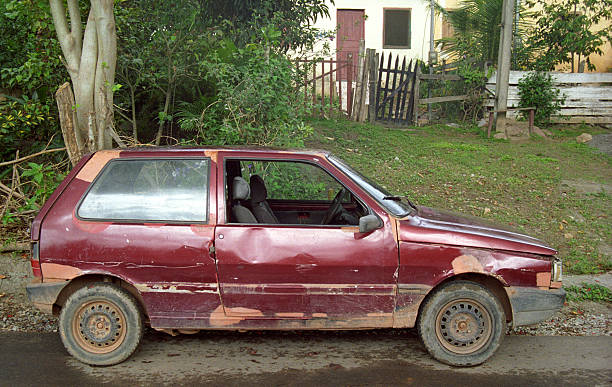

Another thing we see repeatedly is that underlying structural problems often remain invisible until something breaks. In many organisations:
As long as things mostly work, this rarely feels urgent.
It’s only when issues start to bite - performance problems, brittle integrations, rising manual effort, or member dissatisfaction - that deeper questions get asked. By that point, options are more limited and change is more expensive.
The organisations that avoid this trap don’t try to design for every future scenario upfront. Instead, they make deliberate choices that keep systems adaptable, understandable, and easier to evolve over time.
One of the clearest differences we see between organisations that replace systems every five years and those that don’t is how continuous improvement is handled.
Where improvement is successful, two things are always present:
One without the other rarely works.
We’ve seen improvement budgets drift when there’s no clear ownership. We’ve seen product owners become frustrated when priorities are clear, but funding isn’t.
Where both are in place, platforms evolve alongside the organisation - instead of slowly becoming a constraint. This is often the point where the five-year replacement cycle is either broken… or quietly locked in.


The membership organisations that escape the five-year system burn think about technology differently.
They don’t expect to “finish” digital. They expect it to change.
From experience, when this mindset is in place, systems don’t need replacing every five years. They can still be delivering value 15 or even 20 years on - because they’ve been continuously adapted, not repeatedly ripped out.
That doesn’t come from spending more. It comes from spending deliberately.
After delivering and supporting digital platforms for membership organisations over many years, one thing is clear:
Breaking the five-year replacement cycle isn’t about finding the perfect system. It’s about:
When those foundations are in place, technology stops being something organisations periodically recover from - and starts becoming something they build on.
And that’s when value really compounds.

If this feels familiar, you’re not alone.
We work with many membership organisations who already have platforms like Umbraco or Dynamics 365, but feel stuck. Their system technically works but confidence has dipped, workarounds have crept in, and momentum has slowed.
In most cases, the answer isn’t to start again.
It’s to stabilise what you have, rebuild trust in the platform, and put the right foundations in place for steady, ongoing improvement. At Wattle, this is a large part of our day-to-day work and we regularly:
All without the disruption, cost, or risk of full system replacement.
If your organisation is in a digital rut - and the choice feels like live with it or rip it out - there is a third option.
Evolve what you already have, deliberately and sustainably.