- Insights & News
- Contact
- 0117 9717547
How to Build a Membership Engagement Score
A practical guide to building an engagement score that helps membership organisations identify risk earlier, prioritise action, and improve retention.

Membership retention is not just a reporting metric. It's a strategic lever.
The problem is that many organisations only recognise disengagement once it is already showing up in renewal risk. By then, the warning signs have often been present for months. The issue is rarely a lack of data. More often, it is a lack of structure around what that data is actually telling you.
That is where engagement scoring matters.
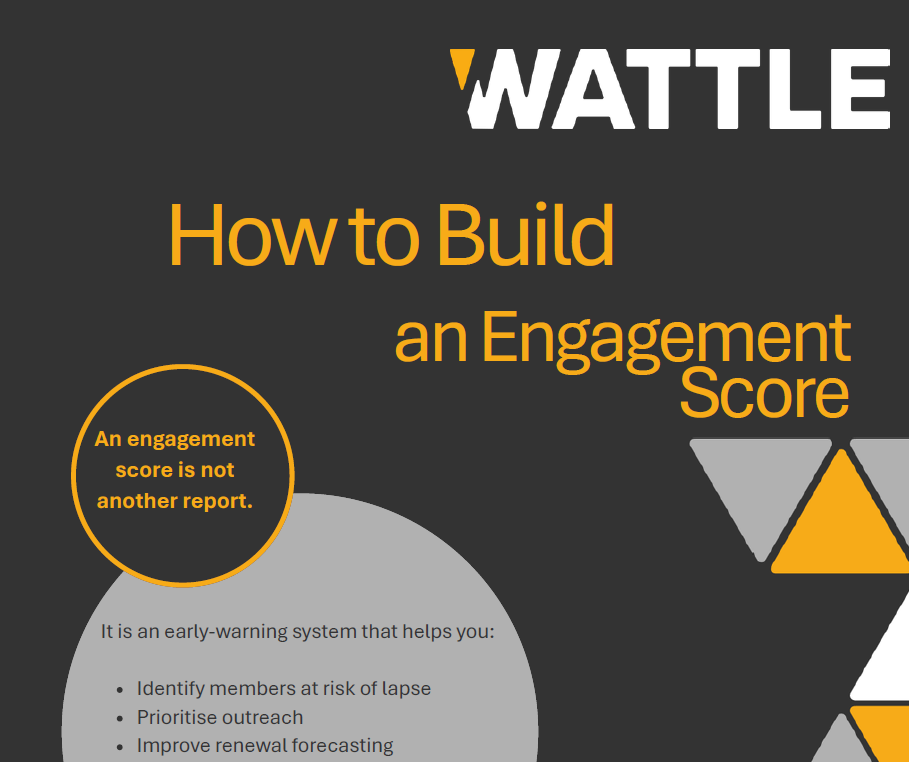
An engagement score is not another report. It is an early-warning system that helps membership organisations identify members at risk of lapse, prioritise outreach, improve renewal forecasting, target communications more intelligently, and demonstrate value more clearly to boards and trustees. Done properly, it moves you from reactive reporting to proactive retention.
Before building any formula, teams need to agree what behaviours show that a member is receiving value.
For most membership organisations, that usually falls into five areas: digital activity, events and community participation, CPD or learning engagement, commercial commitment, and communication interaction. The point is not to measure everything. It is to identify the behaviours that most credibly reflect value.


One of the biggest mistakes is overengineering the model. Complex scoring frameworks often look clever but fail because nobody fully trusts or uses them.
A stronger approach is to use measurable behaviours you already capture. That might include logins, downloads, profile completion, event attendance, volunteering, CPD entries, course completions, upgrade history, add-on purchases, tenure, payment method, email opens, clicks, and survey responses. The score should be simple, transparent, and actionable.
Not all engagement signals deserve equal weight.
A practical model might score out of 100, with digital activity and events / community weighted most heavily, followed by CPD / learning and commercial commitment, with communications engagement carrying a lighter share. The exact mix will vary, but the principle is clear: weight the signals most likely to correlate with retention, not just the ones easiest to report.
This matters because many organisations overvalue portal logins and overlook factors such as payment method or tenure, which can be more predictive.


A score on its own does not improve retention. What matters is what it triggers.
Strong models group members into clear bands, from highly engaged through to high churn risk, then attach actions to each. That could mean re-engagement journeys, targeted event invitations, accelerated renewal reminders, internal follow-up for high-value members, or upgrade and cross-sell activity for engaged segments. An engagement score should trigger behaviour, not sit passively in a dashboard.
No scoring model should be treated as finished. The real test is whether it predicts actual renewal behaviour.
Over time, organisations should compare scores against renewal outcomes and ask hard questions. Which metrics really predicted retention? Are the weightings right? Are we overvaluing digital activity and undervaluing real-world participation? Refinement is part of maturity, not a sign the model is broken.
Membership organisations do not need a perfect model on day one. They need one that is credible, usable, and linked to action.
Used well, engagement scoring helps teams identify risk earlier, prioritise resource more intelligently, and strengthen retention strategy before churn becomes visible in the numbers.

Get started today and download the Engagement Score Guide now.